How many snow monkey parks are there in Japan?
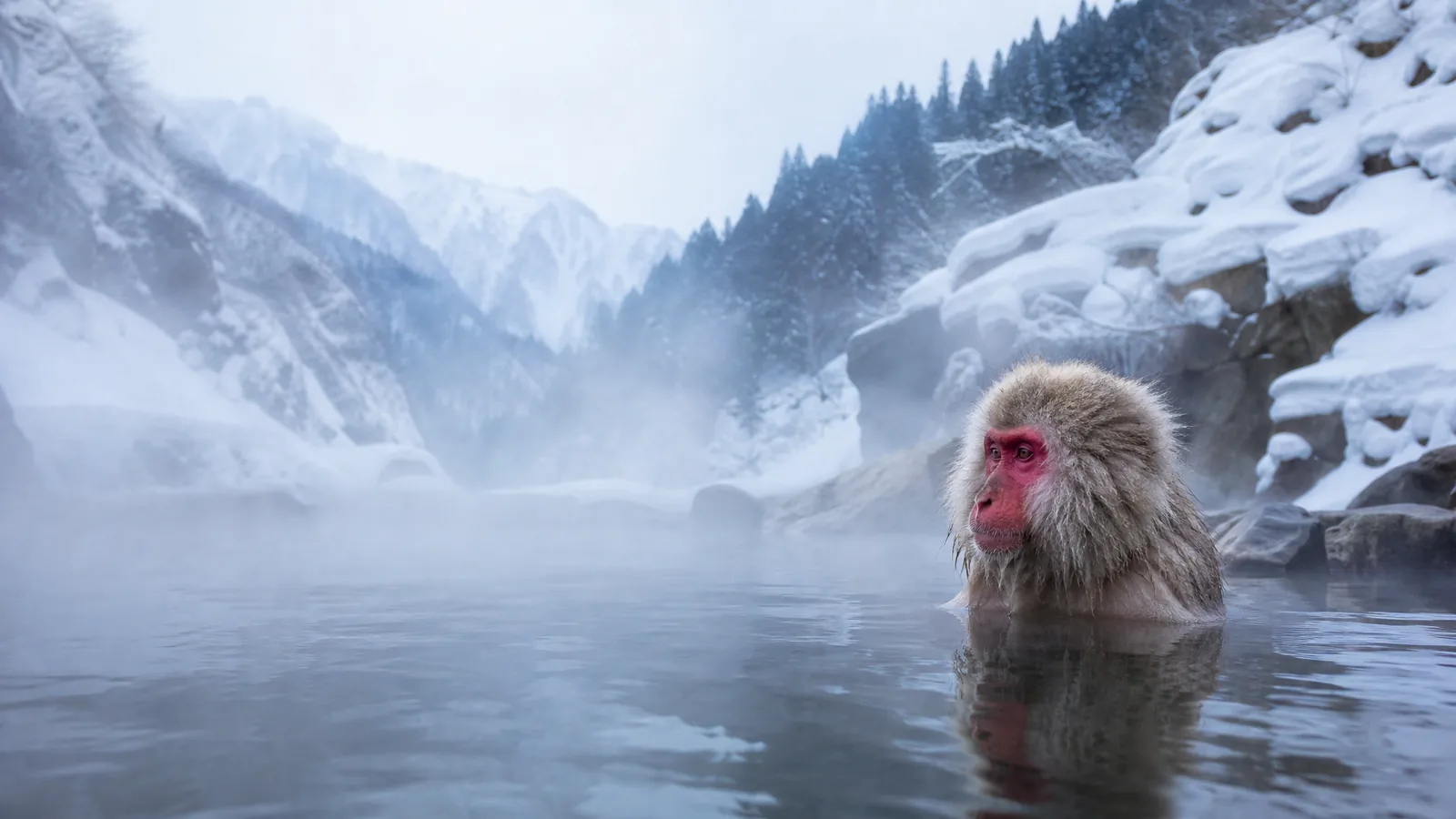
Jigokudani Yaen-koen, Nagano
Opened in 1964 in the Yokoyu River valley in Yamanouchi, inside Joshinetsu Kogen National Park, at 850 m. Around 160 wild macaques use it. The hot-spring pool was made for the monkeys and humans cannot get into it. This is the only place with the bathing behaviour, which is why the same valley appears in every photograph you have seen and why people fly a long way to a small pool. Whether that is a good use of your day is argued out on is it worth it.
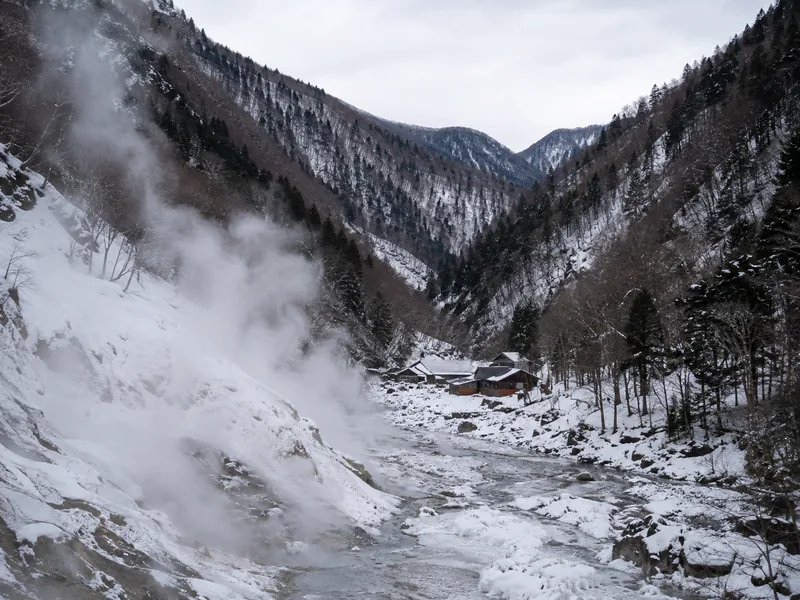
Arashiyama Monkey Park Iwatayama, Kyoto
The one people mean when they ask whether Kyoto has snow monkeys. It does have Japanese macaques, on a hillside above the Katsura River, with a view over the city from the top. It is a different park and a different afternoon: a steep climb of its own, a troop that moves around you in the open, and no hot spring. Worth doing if you are in Kyoto. Not a substitute for Jigokudani, and Jigokudani is not a Kyoto day trip either, which I explain on visiting from Kyoto and Osaka.
Are there snow monkeys in Hokkaido?
No. This one comes up constantly, and I understand why: Hokkaido is the snowy island, the animals are called snow monkeys, the arithmetic seems to work. It does not. The northern limit of wild Japanese macaques is the Shimokita Peninsula in Aomori, at the top of Honshu. There are no wild macaques on Hokkaido at all. If you are planning a Hokkaido trip around monkeys, plan it around something else.
The Shimokita troop is the reason Japanese macaques hold a record: they are the northernmost-living non-human primate in the world. Jigokudani is famous for the bathing, but the species is remarkable a long way north of it.
So what counts as a “snow monkey park”?
Strictly, the phrase describes one place. Loosely, people use it for any site where you can reliably watch Japanese macaques, and Japan has a good number of those across Honshu, Shikoku and Kyushu. If what you want is wild primates at close range, you have options. If what you want is the steam, the snow and the monkey in the water, you want the Yokoyu valley in January, and you want to have read best time to visit before you book a flight.
Getting to the one that bathes
From Tokyo it is roughly 250 km: shinkansen to Nagano, bus or the Dentetsu line out to Kanbayashi Onsen, then 1.6 km on foot. About three hours before the walk. The full routing is on getting there from Tokyo.
Frequently asked questions
Are there snow monkeys in Hokkaido?
No. The northern limit of wild Japanese macaques is the Shimokita Peninsula in Aomori, on Honshu, so there are no wild macaques on Hokkaido. The bathing troop is in Nagano — see getting there from Tokyo.
Does Kyoto have snow monkeys?
Kyoto has Japanese macaques at Arashiyama Monkey Park Iwatayama, on a hillside with a city view and a steep climb. They do not bathe in a hot spring. If you are based in Kansai, read visiting from Kyoto and Osaka before assuming Jigokudani is a day trip.
Where else can you see snow monkeys in Japan?
Japanese macaques live widely across Honshu, Shikoku and Kyushu, and several parks show them. Only Jigokudani Yaen-koen in Nagano has the hot-spring bathing, and only in the cold months — best time to visit explains the seasonality.
Is Jigokudani the only real snow monkey park?
For the behaviour the name implies, yes. Whether that makes it worth the journey depends on your season and your legs, which is the whole of is it worth it.