How cold is the Snow Monkey Park?
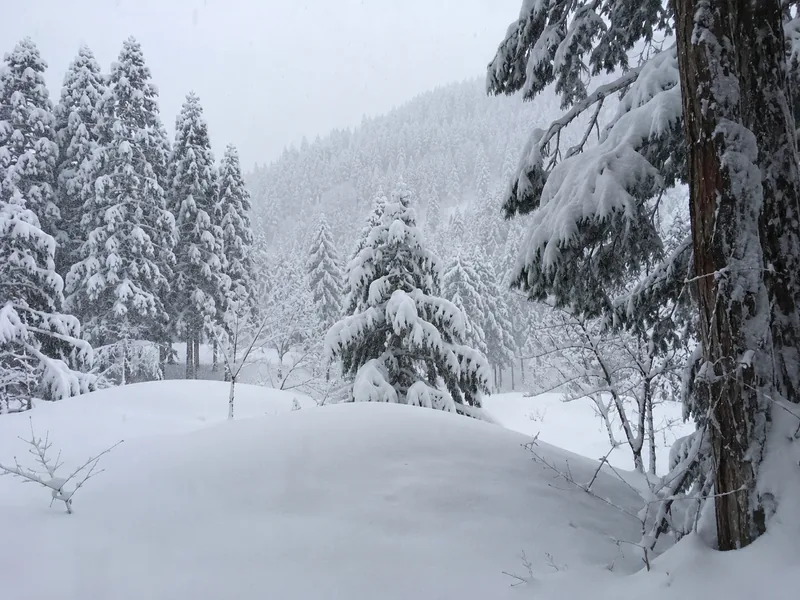
What that feels like
Cold, but not extreme, and manageable in the right clothes. The part that catches people is the shape of the visit rather than the number. You walk uphill for half an hour and get warm, then you stand still beside a pool for an hour and get properly cold, then you walk back down. Dress for the standing. What to wear covers the layers and the gloves.
Why the cold is the point
The bathing is a response to temperature. When the valley is cold the monkeys use the hot spring, and when it is not, they do not. That is why the reliable season is December to March and why January and February are the strongest months. The trade-off is set out on best time to visit: the weather that makes the photograph is the weather that makes the walk hard.
Snow on the ground means the path holds snow long after a fall. A clear blue morning in February is still an icy trail, because the sun does not reach far into that valley.
The trail in the cold
Packed snow and ice for most of the winter, on a path that climbs, with the steepest section last. Nothing about the temperature is dangerous; the surface is what deserves your respect. See the walk to the park.
Frequently asked questions
How cold does it get at Jigokudani Yaen-koen?
Winter temperatures drop to around −10 °C at 850 m, with snow on the ground about four months of the year and snowfall over a metre. Pack for standing still in it — see what to wear.
How much snow does the Snow Monkey Park get?
Snowfall exceeds a metre and the ground stays covered for roughly four months. That is what turns the 1.6 km approach into packed snow and ice — described on the walk to the park.
Do the monkeys bathe because it is cold?
Yes, the hot-spring bathing is cold-weather behaviour, which is why it is reliable roughly December to March and strongest in January and February. Best time to visit goes month by month.