What to know before you plan the day
- Entry is ¥800 for an adult and ¥400 for a child. The park is the cheap part. Here is what the rest of the day costs.
- The walk in is 1.6 km and takes 30 to 35 minutes each way. No vehicles, no shuttle, no step-free route: what the trail is actually like.
- Tokyo to the trailhead is about three hours one way, before you have walked anywhere. Every leg, with the times.
- Around 160 macaques use the park, and the bathing runs roughly December to March. They are here all year, but the pool is a cold-weather habit: month by month.
- The valley sits at 850 m and drops to about −10 °C. Snow covers the ground four months a year, so bring boots: what to wear.
What the ¥800 covers, and what it does not
Admission is the simplest transaction of the whole day. Everything else is on you.
What you get for ¥800
- Admission for one adult; ¥400 for a child aged 6 to 17
- The viewing ground around the hot-spring pool, which was dug for the monkeys
- Opening every day of the year: 8:30–17:00 April to October, 9:00–16:00 November to March
- The park’s live monkey-appearance update, published on its official site before you set off
What it does not cover
- Getting to Yamanouchi. That is the expensive part of the day
- The 1.6 km walk from Kanbayashi Onsen. Whatever you carry, you carry both ways
- Boots, gloves and crampons. The park itself suggests buying simple crampons in advance for a winter visit
- A bath for you. The pool is the monkeys’; people bathe at Shibu Onsen, down the hill
Tokyo to the monkeys, leg by leg
The journey in the order it happens, with the figures I would give you in person.
There are two public-transport shapes to this day. Both open with the Hokuriku Shinkansen to Nagano and both close with the same walk. They differ only in the middle, and the middle is where the decision is.
- Tokyo or Ueno Station — The Hokuriku Shinkansen to Nagano takes roughly 80 to 110 minutes, depending on which service you catch. This is the fast, easy, expensive part.
- Nagano Station — Everything after this is local. The Snow Monkey Express bus leaves from Bus Stop 23 at the East Exit; the Nagano Dentetsu platforms are inside the station.
- Either the Snow Monkey Express bus — Direct to Kanbayashi Onsen in about 40 to 45 minutes. Nagaden also sells a Snow Monkey Pass at ¥6,800 for an adult, which bundles this bus with park entry.
- Or the Nagano Dentetsu line — About 45 minutes to Yudanaka Station, then a short local bus. One more change, but it sets you down beside Yudanaka Onsen and a short hop from Shibu Onsen.
- Kanbayashi Onsen — The bus stop and car park where the road stops. From Tokyo you have used about three hours to stand here, and you have not seen a monkey yet.
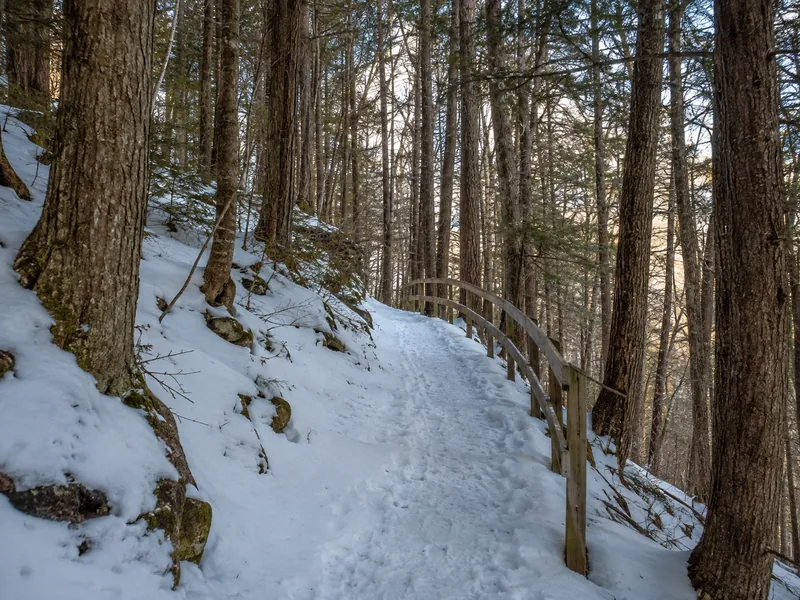
- The 1.6 km trail — Unpaved, through forest, uphill overall, 30 to 35 minutes each way. In winter it is packed snow and ice, and the last stretch is the steepest bit.
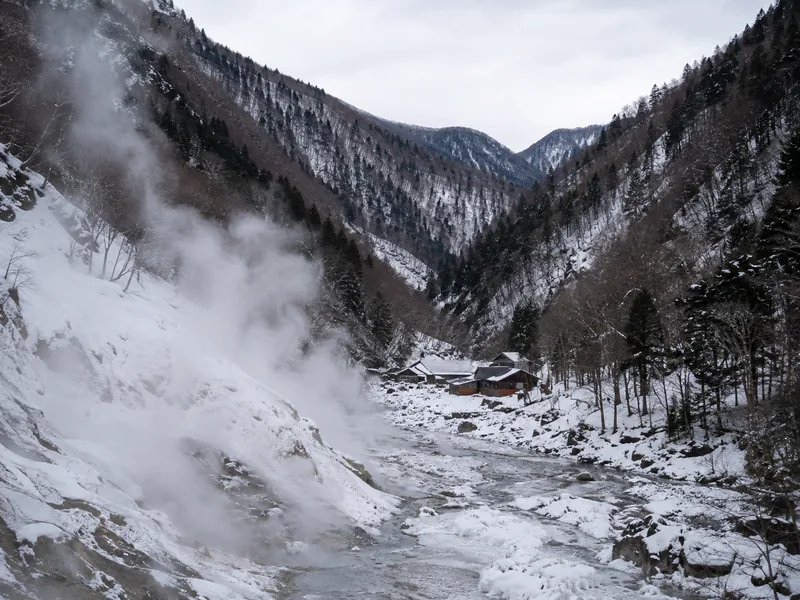
- Jigokudani Yaen-koen — 850 m up, in the Yokoyu valley inside Joshinetsu Kogen National Park. Steam vents out of the frozen valley floor, which is why it is called Hell Valley.
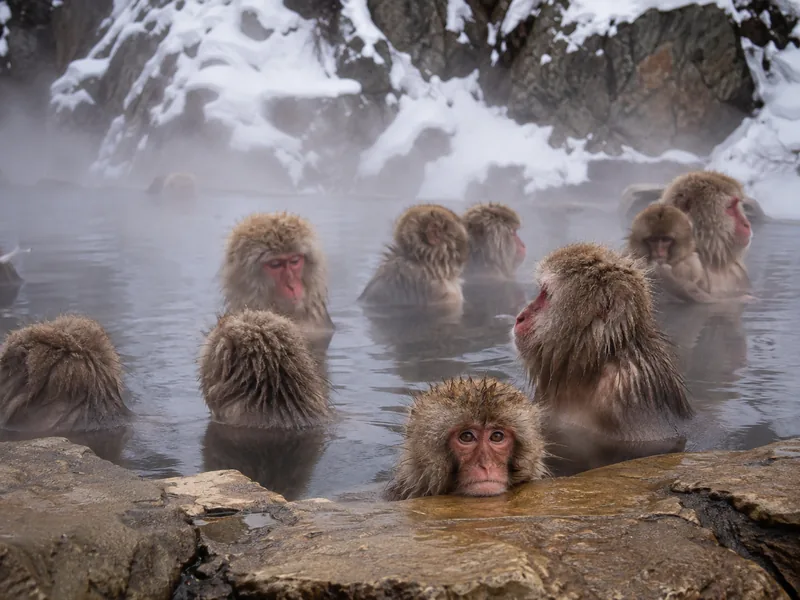
- The hot-spring pool — Dug for the monkeys and used only by them. Around 160 wild macaques come and go as they please; from December to March they sit in the water, and in warm months they are usually along the river instead.
- The walk back — The same 1.6 km, downhill, on legs that have stopped being interested. Plan the day backwards from the last bus, not forwards from the pool.
That is the whole day in one line: three hours of transport, thirty-odd minutes of forest, and then however long you choose to stand still.
Three ways to cover the last stretch
The shinkansen leg is the same however you travel. What differs is what happens after Nagano Station, and that is where people lose an hour they did not budget for. Note the row that does not change.
| Nagano Dentetsu line | Fewest changesSnow Monkey Express bus | A booked tour | |
|---|---|---|---|
| Leaves from | The Nagano Dentetsu platforms inside Nagano Station | Bus Stop 23, Nagano Station East Exit | Set by the operator, usually Nagano city or Tokyo |
| To the trailhead | About 45 minutes to Yudanaka, then a short local bus | About 40 to 45 minutes, direct to Kanbayashi Onsen | Fixed by the itinerary, door to door |
| Changes | One | None | None |
| Park entry | Paid at the gate, ¥800 adult | Paid at the gate, or bundled into Nagaden’s ¥6,800 Snow Monkey Pass | Depends on the tour. The live panel below shows what is on sale |
| You still walk | 1.6 km each way | 1.6 km each way | 1.6 km each way |
| If the trail is ice | Your judgement | Your judgement | Someone has already walked it that morning |
| Suits | Anyone sleeping at Yudanaka or Shibu Onsen | Anyone who wants the shortest chain out of Nagano | Anyone doing the whole thing from Tokyo in one day |
| The full route → | The pass, explained → | Tour or do it yourself? → |
None of the three saves you the walk. A tour buys you the timing, the transfers and a guide who knows whether the last slope is ice today; the bus and the train are cheaper and entirely manageable if you have read the timetable page first. I have written the honest version of that argument on tour or do it yourself.
Snow monkey tours, live from GetYourGuide
If you would rather hand the day to someone else, the panel below is the live listing: current dates, current prices, booked directly with the operator. I do not repeat prices in my own text because they move, and a wrong number is worse than none. There is more on what drives the price differences, and the full set sits on the tours page.
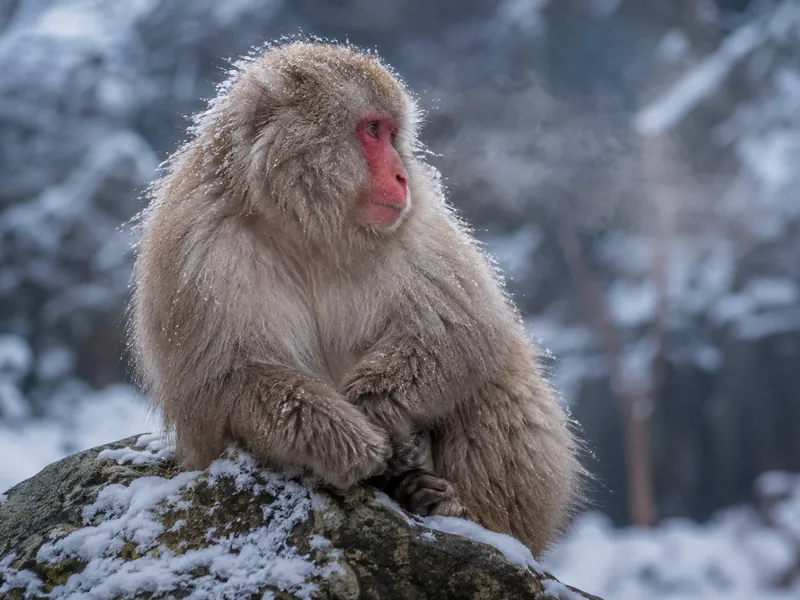
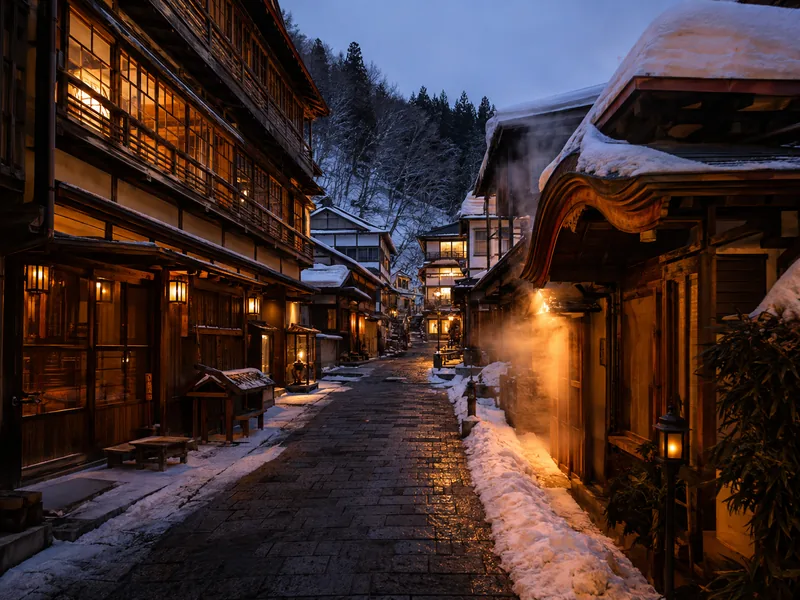
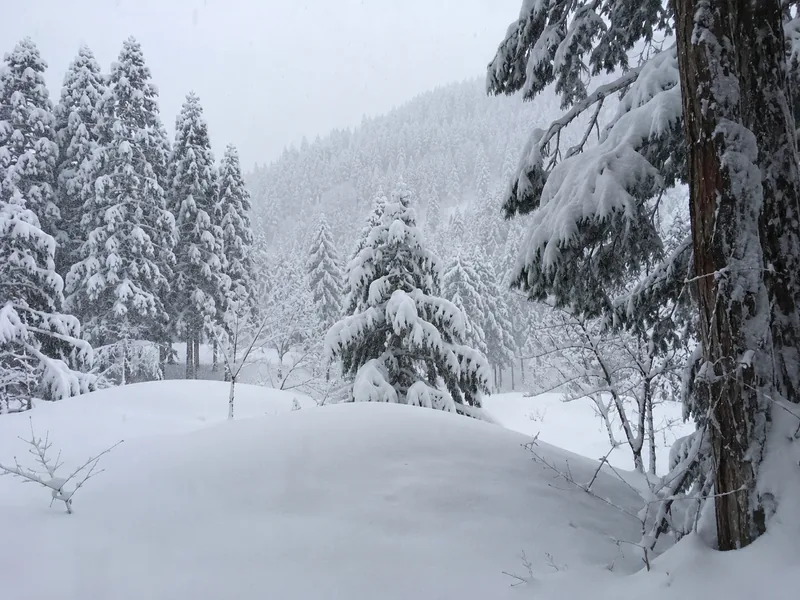
The photographs below are from the trail and the valley itself, in case you want to see what you are walking into.
How I would put the day together
Fix the month first
Everything else follows from it. The photograph you have in your head is a cold-weather habit, not a daily one: the month-by-month version.
Then decide tour or no tour
The park is the easy part. The chain of trains, buses and daylight is what people underestimate: the honest comparison.
Book the bed before the train
Shibu Onsen and Yudanaka are small towns of small ryokan, and winter weekends go early. Staying up here buys you the trail before the coaches arrive.
Check the park’s own page the night before
It publishes a live monkey-appearance update. The park has also announced an online ticketing system from late August 2026, with advance purchase recommended in the busy winter months.
Photo Gallery
Jigokudani through the year
The valley, the trail and the town at the bottom of it.
Things people ask me on the trail
The questions I answer most often on the way up, in the order they come.
Will the monkeys definitely be in the water?
No, and nobody can promise it. They are wild and free-ranging, they come because the park is fed, and they leave when they choose. Bathing is most reliable from December to March and strongest in January and February. The seasonal detail is here.
Is the trail hard?
It is 1.6 km, uphill overall, and it takes 30 to 35 minutes if you are steady on your feet. In January it is packed snow and ice on a slope, and I see trainers fail on it every week. Read this before you decide.
Can I do it from Kyoto?
Not comfortably in a day. Nagano is far closer to Tokyo than to Osaka, and the honest answer is that you need a night somewhere. What it actually takes.
Do I need cash?
Yes. Carry it. Small mountain operations up here are cash-first, and the ¥800 admission is the least of what you will want coins for. The full cost page.
Can’t make these dates?
Browse more available snow monkey park tour and find one that fits your schedule — all with instant confirmation and free cancellation.
Jigokudani Yaen-koen, explained
I live in Yamanouchi, the town the park sits in, and I have walked the trail up to it in every month of the year. Almost everything visitors get wrong happens before they arrive: the wrong month, or treating the last 1.6 km as a detail. The monkeys are the easy part. Here is the rest of it.
What the place actually is
Jigokudani Yaen-koen opened in 1964 in the Yokoyu river valley, inside Joshinetsu Kogen National Park, at an altitude of 850 m. The name means Hell Valley, and it is literal: steam vents out of the frozen valley floor, and in January that steam against a metre of snow is the whole scenery. Around 160 wild Japanese macaques use the park, and there is no enclosure. They come because it is fed and leave when they feel like it, which is why the park publishes a live monkey-appearance update rather than a guarantee.
The hot-spring pool was dug for the monkeys, and only they use it. People do arrive expecting to get in with them. You cannot. Human bathing happens down the hill at Shibu Onsen, a street of wooden ryokan and public baths that is worth a night of its own.
Why the monkeys get in the water
Japanese macaques are the northernmost-living non-human primate in the world. Snow covers the ground here roughly four months a year, temperatures drop to around −10 °C, and snowfall passes a metre. Sitting in a hot spring is a response to that cold rather than a party trick, and it settles your biggest planning question. Bathing is most reliable from about December to March and strongest in January and February. In April the troop is still here, but in the trees and along the river rather than in the pool.
The journey, and the part nobody photographs
Jigokudani is roughly 250 km from Tokyo. The Hokuriku Shinkansen from Tokyo or Ueno to Nagano takes about 80 to 110 minutes depending on the service. From Nagano Station you have two sensible options: Nagaden’s Snow Monkey Express bus from Bus Stop 23 at the East Exit, about 40 to 45 minutes direct to Kanbayashi Onsen, or the Nagano Dentetsu line to Yudanaka in about 45 minutes plus a short local bus. Nagaden sells a Snow Monkey Pass bundling its direct bus with park entry at ¥6,800 for an adult. Call the whole thing three hours one way.
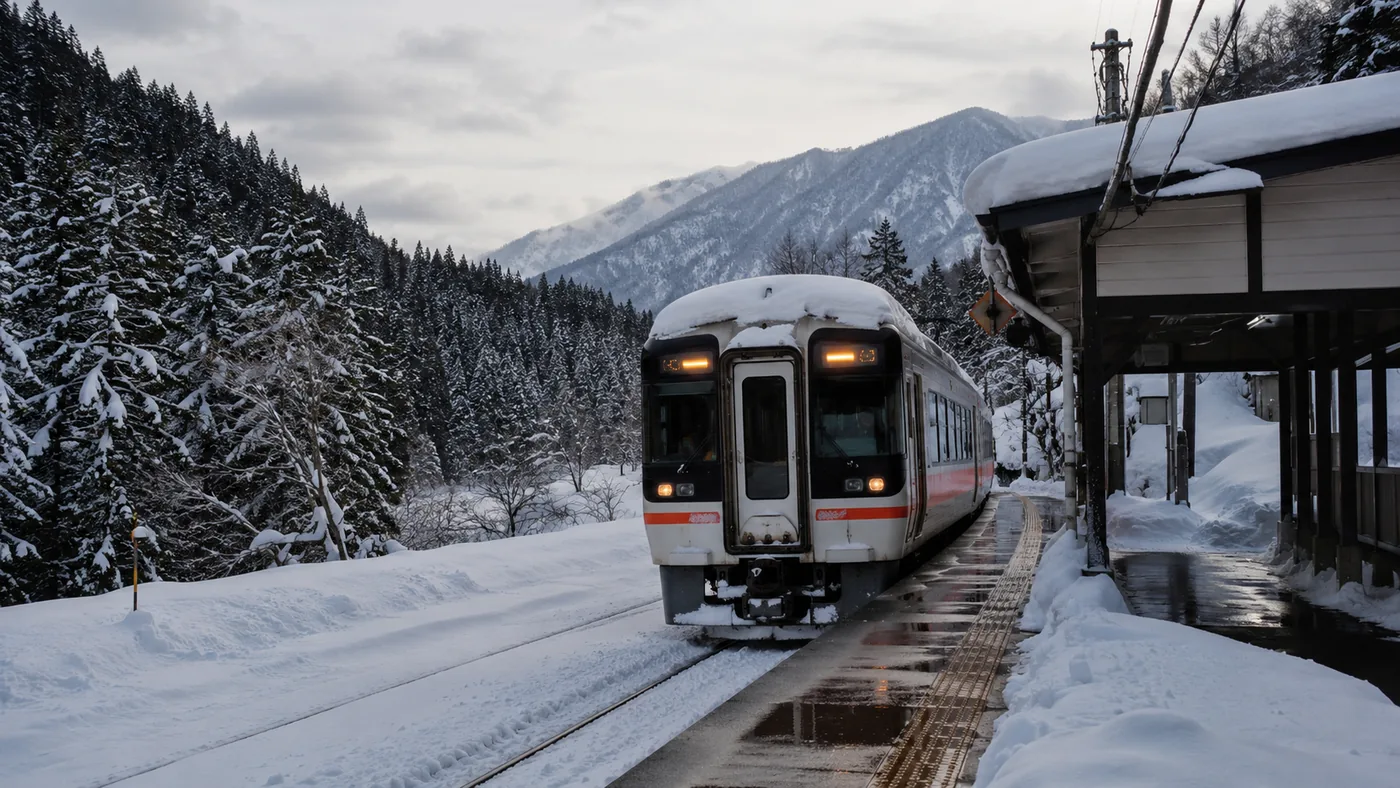
Then comes the part that is missing from every photograph. From the Kanbayashi Onsen bus stop it is 1.6 km of unpaved forest path, 30 to 35 minutes each way, uphill overall. There are no vehicles, no shuttle and no step-free alternative, and whatever you carry up you carry back down. In winter the surface is packed snow and ice, and the steepest section is saved for the end. The park’s own advice to first-timers is hiking shoes in summer, snow boots in winter, and it recommends buying simple crampons in advance. I watch people arrive in February in trainers most weeks, and I watch them come back down very slowly.
The season trade-off, honestly
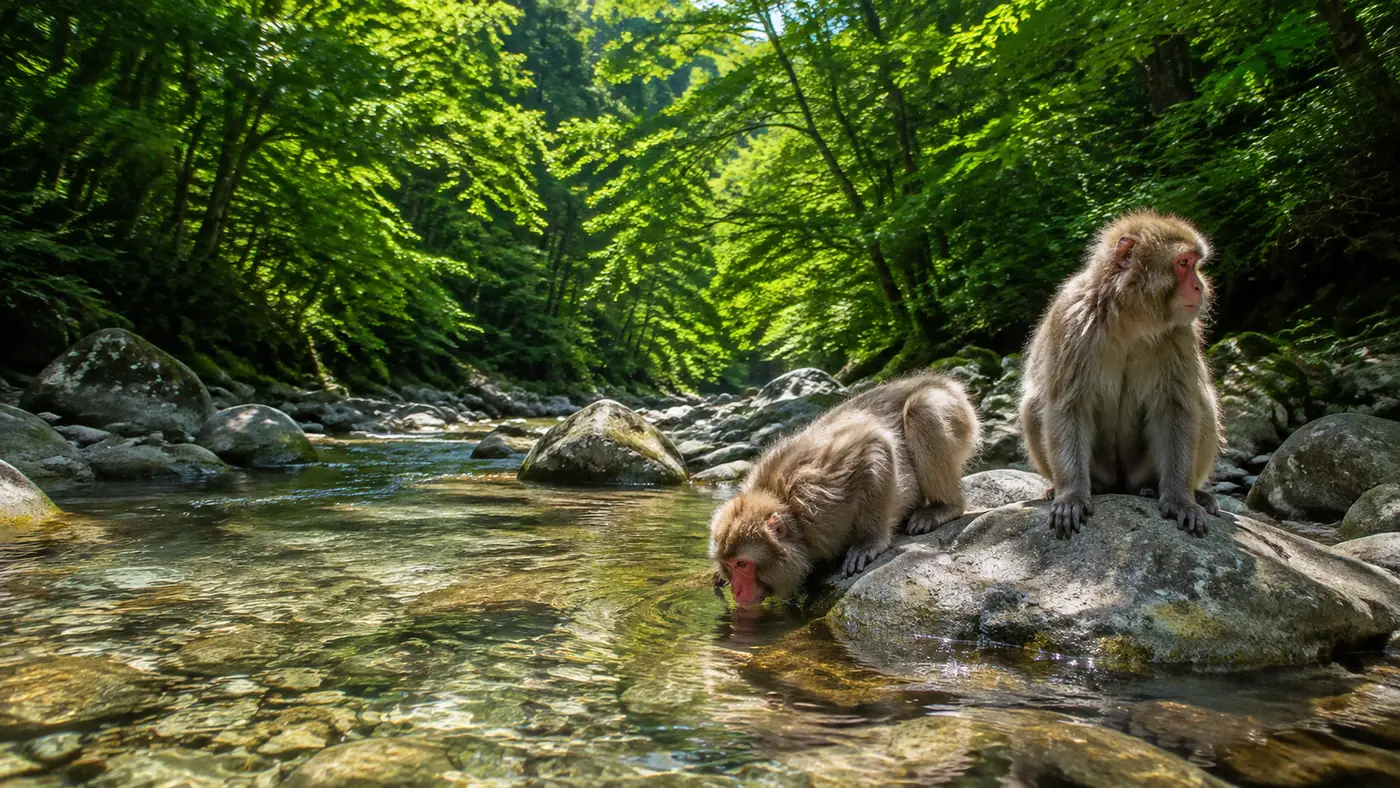
January and February give you the picture you came for and the worst conditions to get it in: ice underfoot, short daylight, and camera lenses fogging the moment you step somewhere warm. Late March keeps some of the cold behaviour with easier walking. Spring brings infants, which I find more interesting than the pool, and a trail you can manage in ordinary shoes. Summer is the weakest version: macaques in a green river valley, no steam, no snow, and a three-hour journey that suddenly feels long. Pick a month deliberately rather than feeling cheated by a postcard.
How to behave when you get there
The rules are short and they matter. Do not touch the monkeys and do not feed them. Do not take food out in the open: a visible snack is an invitation, and the macaque will win. Do not stare into a monkey’s eyes; a direct stare is a threat display in their language, and is read that way. Keep your distance and let them move around you. They are wild animals living their own lives in a valley that happens to have a viewing ground in it, and the arrangement only works because visitors behave like guests.
Admission is ¥800 for an adult and ¥400 for a child aged 6 to 17. The park opens every day, 8:30 to 17:00 from April to October and 9:00 to 16:00 from November to March. It has announced an online ticketing system from late August 2026, with advance purchase recommended in the busy winter months. Bring cash anyway. Small mountain operations here still run on it.
Who should book a tour instead of going alone
Doing this yourself is entirely reasonable. The park is public, the buses run to timetable and the signage is clear. I would still book a tour in three situations. First, if you are coming from Tokyo and back in one day in winter: the daylight is short, the margin between the last useful bus and the last shinkansen is thinner than it looks on paper, and one missed connection eats the trip. Second, if you are not confident on snow and ice, because a guide who walked that trail this morning knows what the last slope is doing today. Third, if you are travelling with people who need the day handled rather than negotiated, which usually means young children, older parents, or a group that will not move at one speed.
If none of that describes you, take the bus, buy your ¥800 ticket at the gate, and give yourself a couple of unhurried hours up there. The macaques reward standing still far more than arriving quickly. Either way, plan the day backwards from the last bus out of Kanbayashi.
Frequently asked questions
Can you see the snow monkeys without a tour?
Yes. Jigokudani Yaen-koen is a public park with a ¥800 adult ticket, and the whole journey runs on scheduled public transport: shinkansen to Nagano, then the Snow Monkey Express bus or the Nagano Dentetsu line, then the walk. The reason people book anyway is the timing and the winter trail rather than the park itself. I have set both sides out on tour or do it yourself.
How do I get to Nagano monkey park from Tokyo?
Hokuriku Shinkansen from Tokyo or Ueno to Nagano, roughly 80 to 110 minutes. From Nagano Station, either the Snow Monkey Express bus from Bus Stop 23 at the East Exit, about 40 to 45 minutes to Kanbayashi Onsen, or the Nagano Dentetsu line to Yudanaka, about 45 minutes, plus a short local bus. Reckon on three hours one way, then the 1.6 km walk. Full detail on getting there from Tokyo.
How much does it cost to see the snow monkeys in Japan?
Park admission is ¥800 for an adult and ¥400 for a child aged 6 to 17. Nagaden sells a Snow Monkey Pass bundling its direct bus with park entry at ¥6,800 for an adult. Carry cash, because small operations up here are cash-first. The rest of the arithmetic is on what a snow monkey day costs.
What months can you see the snow monkeys in Japan?
The macaques are at the park all year. The bathing everyone photographs is a cold-weather behaviour, most reliable from about December to March and strongest in January and February. In spring and summer you see them around the forest and river, with infants in spring, but usually not in the pool. Month by month is here.
How long is the walk to see the snow monkeys?
From the Kanbayashi Onsen bus stop it is 1.6 km of unpaved forest path, 30 to 35 minutes each way, uphill overall. There is no shuttle and no step-free alternative, and in winter the surface is packed snow and ice with the steepest bit last. See the walk to the park and what to wear.
Can you touch the snow monkeys?
No. Do not touch them, do not feed them, do not bring food out in the open, and do not stare into a monkey’s eyes, because a direct stare is a threat display. They are wild animals that happen to tolerate an audience. The rules and the reasons are on can you touch the monkeys.
Are there snow monkeys in Hokkaido?
No. Japanese macaques are the northernmost-living non-human primate in the world, but their northern limit is the Shimokita Peninsula in Aomori, on Honshu. Hokkaido has none. Other macaque sites exist further south, including Arashiyama in Kyoto, though Jigokudani is the only one with the hot-spring bathing: snow monkey parks in Japan.
Is the snow monkey park worth visiting?
In January, with time to stand still and the right boots, it is one of the few sights I still walk to on my days off. On a rushed August afternoon, or for anyone who cannot manage 3.2 km on snow, it is a long way to go to watch macaques by a river. My full verdict is on is it worth it, and the timings are on how long to spend.
Still have questions? Email us [email protected]